

Co-Hosting Lake Arrowhead: Mountain STR Management Guide


Co-hosting Lake Arrowhead vacation rentals is fundamentally different from managing a beach house in Carlsbad or a city condo in San Diego, and property owners who treat these markets the same tend to leave significant revenue on the table. At The Brite Place, we work with mountain property owners across Southern California and see the same gap consistently: owners apply flat-market tactics to a terrain-driven, seasonally extreme resort destination and then wonder why their reviews and revenue plateau. Lake Arrowhead sits inside the San Bernardino National Forest, marketed as the "Alps of Southern California," and that geography shapes everything from guest expectations to emergency response protocols.
Market scale: According to AirDNA, Lake Arrowhead has approximately 1,145 total vacation rental listings, with 55% listed on both Airbnb and VRBO, making multi-platform channel management essential.
Revenue potential: Based on Airbtics STR dashboards, hosts in Lake Arrowhead generate an average annual income of roughly $40,000 to $41,562 per listing, with a median occupancy rate of 39% and an average daily rate of $322.
Peak timing: December and November are among the busiest months, confirming that winter-holiday and ski-adjacent demand drives the majority of annual revenue.
Regulatory environment: San Bernardino County limits STR permits to one per parcel and requires transient occupancy tax (TOT) collection, typically in the 10-12% range.
Mountain-specific risks: Snow removal, road access, bear-proofing, and fire-risk compliance are operational realities with no coastal equivalent, and they require a co-host model built around local, on-call coverage.
What Makes Lake Arrowhead a Different Kind of STR Market?
Lake Arrowhead is a resort community embedded in the San Bernardino National Forest, located at roughly 5,100 feet elevation in the San Bernardino Mountains. That elevation is not a marketing detail. It is the defining operational variable for every property in the market. Snow accumulation can cut off driveways between guest arrivals. Summer wildfire smoke can trigger air quality advisories mid-booking. The lake itself operates under Arrowhead Lake Association (ALA) access rules, meaning guests cannot simply walk to the water without ALA wristbands obtained through the marina office.
Unlike coastal markets where guest needs are predictable and vendors are abundant, Lake Arrowhead co-hosting requires a local network that most platforms do not help you build. According to Lake Arrowhead's regional tourism site, the resort offers year-round activities including hiking, water skiing, snow skiing, fishing, and backpacking. But delivering on those experiences for guests requires a co-host who knows the specific trailhead access rules, ALA wristband protocols, and which roads ice over first after a winter storm.
The market is also meaningfully concentrated. San Bernardino County analysis shows approximately 8% of Lake Arrowhead's housing stock is used as STRs, a proportion high enough to create regulatory pressure and competitive noise. With around 1,100 to 1,274 active Airbnb listings depending on the snapshot period, standing out requires more than a good price. It requires a co-hosting setup that delivers consistent five-star execution across a challenging physical environment.
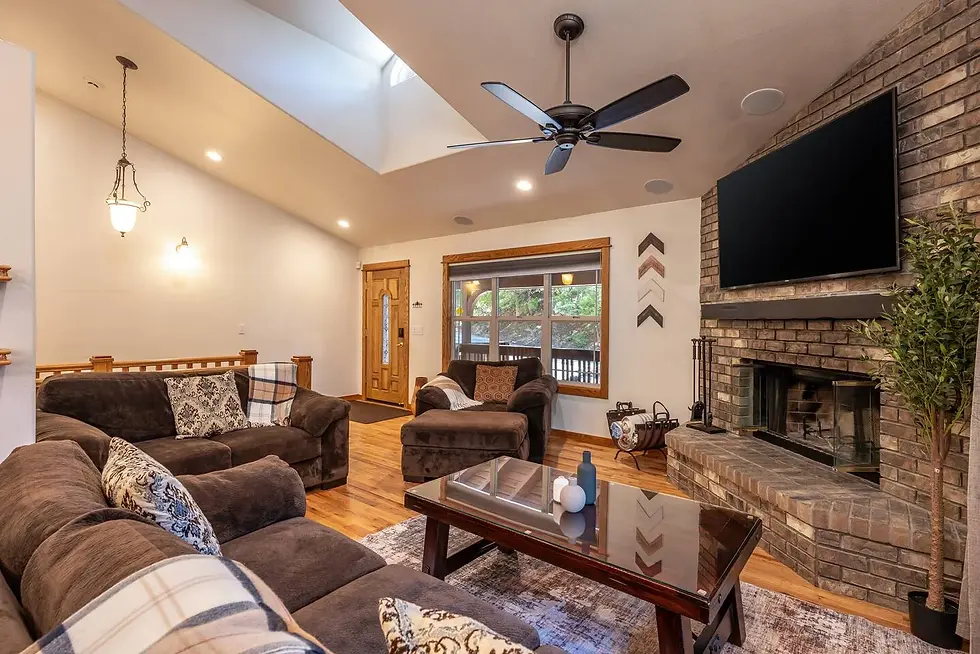
What Is the Difference Between Co-Hosting and Full Property Management in Lake Arrowhead?
Co-hosting in Lake Arrowhead refers to a collaborative arrangement where a property owner retains primary control and listing ownership while delegating specific operational tasks to a local co-host. Full property management, by contrast, transfers day-to-day authority and decision-making to a professional management company. Both models exist in Lake Arrowhead, and the right choice depends on how involved you want to remain and how complex your property's operational demands are.
According to OwnerRez's detailed breakdown of co-hosting versus property management, co-hosts typically handle guest communication, check-in and check-out instructions, in-stay concerns, local emergencies, cleaning and maintenance coordination, inspections, scheduling, and restocking essentials. The owner retains primary decision-making authority. A full-service property manager takes over those same duties but also controls pricing strategy, platform optimization, and financial reporting.
In Lake Arrowhead specifically, the distinction matters because mountain properties carry higher emergency frequency than coastal ones. A guest locked out during a January snowstorm or a generator that fails during a power outage requires a co-host who is physically proximate and available around the clock. Remote co-hosting models that work in San Diego often fail in Lake Arrowhead because the 90-minute drive from the greater Los Angeles basin is simply too slow when something goes wrong at 11 PM.
For owners who want fully hands-off operations, The Brite Place provides co-hosting and full-service management that includes dynamic pricing, guest communication, cleaning coordination, and compliance oversight. Owners who want to remain involved in pricing decisions but need reliable local operational support are better served by a co-hosting arrangement where responsibilities are clearly divided from the start.
What Are the STR Regulations Property Owners Need to Know in Lake Arrowhead?
Short-term rental regulations in Lake Arrowhead are governed by San Bernardino County Land Use Services, and as of 2026, the regulatory landscape is more structured than many new hosts expect. San Bernardino County requires all STRs to be registered, limits permits to one per parcel, and restricts STR operations in certain zoning districts where housing stock has already been heavily converted to short-term use.
Owners and co-hosts must collect and remit transient occupancy tax on all short-term stays. County-level TOT rates in San Bernardino County typically fall in the 10-12% range, though the exact figure can vary by community designation. Failure to remit TOT is one of the most common compliance violations in mountain markets, and it can result in permit revocation. If you are co-hosting a property but the owner holds the permit, clarify in writing which party is responsible for TOT remittance before your first booking goes live.
Noise and nuisance ordinances apply to all STRs in Lake Arrowhead. Repeat violations can trigger permit suspension or permanent revocation. Co-hosts operating multiple properties in the area should document noise-management protocols in house rules and confirm that guest-screening procedures align with county expectations. The BNBcalc California STR guide and San Bernardino County's STR Technical Memo are the most current primary sources for permit requirements.
One underappreciated regulatory layer specific to Lake Arrowhead is lake access. The Arrowhead Lake Association controls water access, and guests at most properties cannot use the lake without ALA wristbands. Co-hosts who fail to communicate this clearly create a consistent source of negative reviews and owner disputes. Building ALA access instructions into your digital guidebook is not optional. It is a baseline expectation for every co-hosted property near the lake.

What Mountain-Specific Challenges Does Co-Hosting Lake Arrowhead Actually Require?
Mountain co-hosting challenges in Lake Arrowhead are categorically different from those in coastal or urban STR markets, and this is the operational gap that most generalist co-hosting guides completely miss. Specifically, Lake Arrowhead co-hosts must manage snow removal and driveway plowing between turnovers, bear-proofing for outdoor trash storage and kitchen ventilation, fire-risk compliance during high-wind events, generator or backup power reliability during storm-related outages, and road accessibility verification before check-in windows open.
Snow removal is the most immediately disruptive. A turnover day that falls after a winter storm means your cleaning crew cannot access the property until a plow has cleared the driveway, which can delay check-in by several hours. Co-hosts who do not have a contracted plowing vendor on call will scramble every time it snows, which in Lake Arrowhead can happen multiple times per month from November through March. Build plowing into your vendor network before winter season, not after your first conflict.
Bear-proofing is a year-round requirement, not a seasonal one. San Bernardino National Forest black bears are active throughout the area, and guests who leave food waste in uncovered outdoor bins create liability for the owner and complaints from neighbors. Your house rules need to specify bear-canister or bear-lock requirements for outdoor trash, and your co-host needs to inspect compliance after every checkout.
Fire risk is a third operational layer that coastal co-hosts never encounter. During Red Flag conditions, co-hosts should be prepared to communicate evacuation protocols to guests mid-stay and, in extreme cases, coordinate emergency checkouts. Building a fire emergency protocol into your co-hosting agreement is specific to markets like Lake Arrowhead and Big Bear, and it is something The Brite Place addresses directly in management contracts for mountain properties.
Finally, generator reliability matters more in Lake Arrowhead than anywhere else in Southern California. Power outages during winter storms can last 12 to 36 hours, and guests who arrive expecting a working hot tub and heated cabin in freezing temperatures will leave negative reviews if backup power fails. If your property has a generator, your co-host needs to test it at least monthly and document the test date.

How Should You Structure Seasonal Pricing for Lake Arrowhead Properties?
Seasonal pricing for Lake Arrowhead short-term rentals follows a dual-peak model that differs from single-peak beach markets. Specifically, Lake Arrowhead sees its strongest demand in December through early January for winter holidays and in July through August for summer lake season. Both peaks allow for premium nightly rates, but the revenue spread between peak and shoulder months is steep enough that flat pricing strategies will consistently underperform.
According to Airbtics data, the average daily rate in Lake Arrowhead sits around $322, but that figure masks wide seasonal variance. Properties that use dynamic pricing tools to capture holiday premiums during December and New Year's Eve consistently outperform properties that set static rates for the winter quarter. The same logic applies to summer weekends, when demand from the greater Los Angeles area drives last-minute booking spikes on Fridays and Saturdays.
The 80/20 rule referenced frequently in Airbnb operator communities applies directly here: roughly 60-80% of annual STR revenue in seasonal mountain markets is generated during peak months. That concentration means underpricing a single holiday weekend can cost more than underpricing an entire shoulder month. Your pricing strategy needs to treat December 26 through January 1 as a distinct pricing tier, not simply "winter."
Mid-week stays are where experienced Lake Arrowhead co-hosts find margin that competitors leave behind. Outdoor recreation demand, specifically hiking, fishing, and water sports, drives genuine mid-week bookings during summer. Positioning your listing with trail access, ALA lake proximity, and proximity to Lake Arrowhead Village shopping and the 2026 Lake Arrowhead Summer Concerts series gives you content hooks that justify mid-week rates above the regional average.
For owners who want data-driven pricing without managing it themselves, the short-term rental management services offered by The Brite Place include revenue management and dynamic pricing as a core component, not an add-on.
What Co-Hosting Staffing Model Works Best in Lake Arrowhead?
Co-hosting staffing models for Lake Arrowhead properties are a topic almost entirely absent from competing guides, which focus on platform mechanics rather than operational reality. The right staffing model depends on your property count, property type, and whether you are managing a single cabin versus a portfolio of mixed-type rentals across the mountain community.
For a single-property owner working with one local co-host, a 24/7 on-call model with a dedicated local contact is the minimum viable structure. That co-host needs to live within 20 to 30 minutes of the property, not 90 minutes away in the valley. During winter months, travel time from the base of the mountain can double or triple due to chain control requirements on Highway 18 and Highway 138. A co-host based in Running Springs or Cedar Glen is materially more responsive than one commuting from the San Bernardino valley.
For multi-property portfolios in Lake Arrowhead, a tiered model works better. A dedicated on-site co-host handles guest communication and emergency response, while a separate cleaning and maintenance coordinator schedules turnovers and vendor work. Splitting these roles prevents the single-point-of-failure problem where one co-host's unavailability brings down operations across multiple properties simultaneously.
Property type also shapes staffing requirements. A 3-bedroom cabin like Oak and Arrow Lodge, which The Brite Place manages in Lake Arrowhead, has different turnover complexity than a 9-guest property with a fire pit, fireplace, and washer/dryer. Co-hosts managing larger cabins need longer turnover windows, typically 4 to 5 hours compared to 2 to 3 hours for smaller units, and they need cleaning crews experienced with wood fireplace ash removal and outdoor fire pit maintenance.
Remote co-hosting, where the co-host manages everything digitally from outside the mountain community, is rarely viable for Lake Arrowhead. The physical access complexity, from ALA wristband pickup logistics to snow removal coordination, requires someone who can visit the property within an hour of any guest-reported issue. If you are an absentee owner, choosing a co-host or management company with genuine local presence is non-negotiable.
Where Can You Find a Co-Host for Your Lake Arrowhead Property?
Finding a qualified co-host for Lake Arrowhead starts with Airbnb's official Lake Arrowhead Co-Host Network, which lets owners search for experienced local co-hosts, review their hosting history, and define the scope of responsibilities before making contact. The Co-Host Network is the most structured starting point because it surfaces co-hosts with verified Airbnb history and guest reviews, which provides baseline accountability that informal referrals cannot.
Beyond Airbnb's native tool, local property management companies operating in the mountain market are another option. Regional operators like Grand Welcome Big Bear and Lake Arrowhead, Triple A Rentals, and Arrowhead Property Rental all provide management or co-hosting adjacent services for the Lake Arrowhead area. Reviewing them on the Zillow property manager directory for Lake Arrowhead gives you access to verified client reviews before making a commitment.
When vetting any co-host candidate, ask specifically about their winter operations experience. Can they coordinate plowing? Do they have a bear-proofing checklist? Have they managed a property through a multi-day power outage? These are not hypothetical scenarios in Lake Arrowhead. They are recurring operational events that separate experienced mountain co-hosts from candidates who learned short-term rental management in flat markets.
For owners who want to understand what an Airbnb co-host actually does before committing to a model, reviewing the role definitions clearly prevents mismatched expectations. The most common co-hosting dispute is scope creep, where responsibilities were never defined and the co-host ends up doing full management work at co-hosting pay rates.
How Do Different Property Types in Lake Arrowhead Require Different Co-Hosting Approaches?
Property type is the most underappreciated variable in Lake Arrowhead co-hosting strategy, and it is a content gap that almost no competitor addresses. Specifically, a lakefront stand-alone cabin, a forest-set mountain retreat, a condo within the Lake Arrowhead Village complex, and a large lodge-style rental for groups of 8 or more all require distinct co-hosting workflows, pricing models, and guest education strategies.
Lakefront or lake-access properties require the most co-hosting complexity because ALA access rules add a layer of guest education that other property types do not face. Co-hosts managing lake-access properties need a clear process for distributing ALA wristbands, explaining the trail-marker access system (ALA trail markers 7 and 8 on John Muir Road being common reference points per The Grizzly Lodge Guidebook), and managing guest expectations about when and where lake access is available. Failing to address this proactively generates the most predictable negative review category for Lake Arrowhead properties.
Forest-set cabins without lake access, like many of the properties in the Cedar Glen and Blue Jay neighborhoods, require stronger emphasis on outdoor recreation guidance and wildlife awareness. Guests booking a forest cabin expect a specific experience, and co-hosts who prepare a detailed digital guidebook covering nearby hiking trails, fire pit safety rules, and bear awareness protocols consistently earn higher review scores than those who leave guests to figure it out.
Large-group lodges, defined here as properties accommodating 8 or more guests, require more rigorous noise management and neighbor relations work. San Bernardino County's noise ordinances apply to all STRs, but large-group properties generate more neighbor complaints per booking on average. Co-hosts managing these properties should conduct an in-person or video check-in to set expectations, not just send automated messages.
Condos within Lake Arrowhead Village or within HOA-governed communities carry a different compliance layer entirely. HOA rules may restrict rental duration, require separate approval for STR use, or impose guest conduct standards beyond county ordinances. Co-hosts operating within these communities need to maintain a current copy of HOA rules and include relevant restrictions in their house rules document.
Practical Checklist: Setting Up a Mountain Co-Hosting Operation That Actually Works
Setting up a co-hosting operation for Lake Arrowhead requires a structured onboarding process that accounts for mountain-specific risks from day one. Use this framework before your first booking goes live.
Verify permit status first. Confirm your San Bernardino County STR permit is active, your parcel is eligible, and your TOT registration is complete. Co-hosting an unpermitted property exposes both owner and co-host to fines and permit denial.
Build your local vendor network. Identify and contract with a plowing company, a licensed HVAC technician experienced with mountain systems, a general handyman with availability during holiday weekends, and a cleaning crew that can complete turnovers within your check-in window.
Create an ALA access protocol. If your property is eligible for lake access, document the wristband pickup process, the relevant ALA trail markers, and the parking logistics so your digital guidebook answers this question before guests ask.
Write a fire emergency protocol. Include Red Flag condition response steps, evacuation routes, and the co-host's direct contact number for emergency situations. Post this physically in the property and include it in the digital guidebook.
Set up dynamic pricing with seasonal tiers. At minimum, create distinct pricing tiers for peak winter (December holiday through New Year's), peak summer (July 4th through mid-August), shoulder season, and off-peak. Static annual pricing will underperform against competitors who adjust weekly.
Define co-host scope in writing. Specify which decisions the owner makes (major repairs, pricing policy, listing changes) and which the co-host handles independently (same-day maintenance calls, cleaning rescheduling, minor supply restocking). Ambiguity here is the most common source of co-hosting relationship breakdown.
Test all backup systems before winter. Generator, backup heat source, well pump if applicable, and any smart locks that depend on WiFi connectivity. Mountain power outages are not rare events. They are scheduled operational risks.
Owners who manage Big Bear properties alongside Lake Arrowhead rentals will recognize most of these steps. For a deeper look at occupancy patterns across Southern California mountain markets, the data on Big Bear occupancy rate averages provides useful context for setting realistic performance benchmarks across both destinations.
Frequently Asked Questions About Co-Hosting Lake Arrowhead Properties
What is the 80/20 rule in Airbnb, and how does it apply to Lake Arrowhead?
The 80/20 rule in Airbnb hosting refers to the pattern where roughly 80% of a property's revenue is generated by 20% of its available nights, typically peak-demand weekends and holidays. In Lake Arrowhead, this concentration is especially pronounced because seasonal demand peaks sharply in December and July. Co-hosts and owners who optimize pricing specifically for those high-demand nights, rather than averaging rates across the year, capture significantly more revenue per booking period.
What famous people live on Lake Arrowhead?
Lake Arrowhead has historically attracted celebrities and entertainment industry figures from the greater Los Angeles area as a mountain retreat destination. The community's private lake access, gated neighborhoods, and proximity to the San Bernardino National Forest have made it a popular second-home location for California's entertainment and business communities. However, naming current residents is not something property managers typically verify or publicize, and specific celebrity residences are not a reliable factor in STR strategy.
Where can I find an Airbnb co-host for Lake Arrowhead?
The most direct starting point is Airbnb's official Co-Host Network for Lake Arrowhead, which lets owners search for local co-hosts with verified hosting histories. You can also contact regional property management companies like Triple A Rentals, Grand Welcome Big Bear and Lake Arrowhead, and Arrowhead Property Rental, all of which offer management and co-hosting adjacent services in the mountain market. When vetting candidates, prioritize co-hosts who live within 20 to 30 minutes of your property and have direct experience managing through Lake Arrowhead winters.
How much does it typically cost to rent a cabin in Lake Arrowhead?
Based on Airbtics STR data, the average daily rate for Lake Arrowhead vacation rentals sits around $322, though rates vary considerably by property size, proximity to the lake, amenities, and season. Holiday weekends in December and summer July bookings command the highest premiums. Co-hosts and owners using dynamic pricing tools typically see better revenue capture than those using static annual rates.
What does San Bernardino County require for STR permits in Lake Arrowhead?
San Bernardino County requires all short-term rentals to register with Land Use Services and limits permits to one per parcel. Owners must also collect and remit transient occupancy tax on all guest stays, with county-level TOT rates typically in the 10-12% range. Properties in certain zoning districts may be ineligible for STR permits based on housing stock conversion ratios in that area. Reviewing the current San Bernardino County STR Technical Memo and consulting the BNBcalc California STR guide are the recommended starting points for permit applications.
Can a co-host manage my Lake Arrowhead property if I live out of state?
Yes, but the co-hosting model requires a locally based co-host rather than a remote one. Mountain co-hosting in Lake Arrowhead specifically requires someone who can physically access the property within an hour for emergencies, coordinate snow removal between turnovers, and handle bear-proofing and fire-risk compliance. Absentee owners relying on a co-host based outside the mountain community should expect operational gaps, particularly during winter weather events when Highway 18 access may be restricted.
What is the difference between co-hosting and full-service property management fees?
Co-hosting arrangements in Lake Arrowhead typically allocate 20-35% of gross rental income to the co-host, depending on the scope of duties. Full-service property management fees in the U.S. STR market generally range from 15-25% of gross revenue, but may be higher in complex mountain markets where operational demands include seasonal maintenance, emergency response, and regulatory compliance. Co-hosting is typically lower cost but requires the owner to retain more decision-making involvement, while full-service management is higher cost and more hands-off.
Ready to Optimize Your Lake Arrowhead Rental?
Managing a short-term rental in Lake Arrowhead requires coordinating seasonal pricing, mountain-specific maintenance, ALA access protocols, San Bernardino County compliance, and local vendor relationships simultaneously. Owners who build the right co-hosting structure from the start consistently outperform those who adapt a coastal playbook to a mountain market. The difference shows up in review scores, repeat bookings, and revenue stability across shoulder months.
Whether you are setting up your first Lake Arrowhead cabin or trying to optimize an underperforming existing listing, the foundational steps are the same: get your permit verified, build your local vendor network, price dynamically by season, and choose a co-host who lives close enough to respond to winter emergencies.

If you want professional co-hosting or full-service management for your Lake Arrowhead property, the team at The Brite Place handles revenue optimization, guest communication, cleaning coordination, and regulatory compliance for mountain properties across Southern California. Reach out through the contact page to discuss your property's specific needs.


Comments