

Property Management Lake Arrowhead CA: Mountain vs Beach Rental Challenges

Updated: May 6

Property management in Lake Arrowhead, CA refers to the professional oversight of short-term and long-term rental properties in the San Bernardino Mountains, a market with fundamentally different operational demands than Southern California's coastal communities. According to AirDNA 2026 data, Lake Arrowhead hosts 1,110 active STR listings with an average daily rate of $405 and average annual revenue of $26,900 per listing. But raw revenue numbers only tell part of the story. The operational complexity of mountain property management, from snow load liability and fire risk zones to private lake access rules, creates a management challenge that's genuinely unlike anything you face on the coast.
Lake Arrowhead STR market overview (2026): 1,110 total listings tracked across Airbnb and VRBO, 34% occupancy rate (up 4% year-over-year), $405 average daily rate, and $128.10 RevPAR (AirDNA, 2026).
Regulatory complexity is high: San Bernardino County requires a Short-Term Private Home Rental Permit for any stay under 30 days; AirROI reports 94% of active Lake Arrowhead listings show registration evidence, signaling active enforcement.
Mountain properties face unique physical risks: Snow load damage, frozen pipes, wildfire zone insurance requirements, and seasonal road access all create maintenance costs with no beach-market equivalent.
HOA and lake access rules matter: Lake Arrowhead is a private lake community with HOA restrictions that directly affect what you can rent, to whom, and at what frequency.
Revenue is highly seasonal: Peak STR revenue falls in December, July, and January; the weakest months are March, September, and October (AirROI, 2026).
Performance gap is wide: The top 10% of Lake Arrowhead STR listings generate $8,070+ per month; the median property earns approximately $2,940 per month (AirROI, 2026).
If you own a cabin or mountain home in Lake Arrowhead and you're deciding whether to self-manage or hire professional help, the comparison to beach rental management is the right starting point. The two environments share almost nothing operationally. At The Brite Place, we manage properties across both the Southern California mountains and the San Diego coast, and the difference in day-to-day complexity is significant enough to warrant a full breakdown.
This article covers what property management in Lake Arrowhead actually involves, where it diverges sharply from coastal management, what the local market data says about realistic revenue expectations, and what regulatory and insurance factors owners consistently underestimate. If you're evaluating a management company or deciding whether to bring in professional help, this is the context you need before making that call.
What Makes Lake Arrowhead Property Management Different From Coastal Markets?
Lake Arrowhead property management is distinct from coastal property management because the physical environment, regulatory structure, and guest demand patterns create operational demands that standard beach-market playbooks simply do not address. Specifically, mountain properties require year-round maintenance protocols for weather damage, fire risk mitigation, and seasonal access issues that coastal managers never encounter. Meanwhile, beach properties in markets like San Diego, La Jolla, or Encinitas contend with salt air corrosion, coastal regulation layers, and a tourist calendar that runs nearly year-round rather than spiking in two or three discrete windows.
Weather and Physical Plant Differences
Lake Arrowhead sits at approximately 5,100 feet elevation in the San Bernardino Mountains. Snow accumulation is a genuine operational variable: roofs need snow load inspection, pipes require winterization, and driveways need clearing before guests arrive. A turnover that takes two hours in July can take four hours after a storm in January.
Beach properties in San Diego County face almost no weather-related closure risk, but salt air accelerates corrosion on HVAC systems, railings, appliances, and exterior finishes. Maintenance cycles for coastal properties are shorter on metal and painted surfaces, while mountain properties cycle faster on roofing, insulation, and plumbing.
Fire Risk Zone Considerations
Lake Arrowhead falls within areas designated as high or very high fire hazard severity zones by the California Department of Forestry and Fire Protection. This classification affects insurance availability, premium costs, and what safety equipment the property must have on-site. Many standard homeowners' insurance carriers have reduced coverage in these zones since 2023, meaning mountain property owners often pay significantly more for coverage, and some face non-renewal.
Beach properties in Del Mar, Carlsbad, or Pacific Beach face minimal fire zone exposure but carry their own coastal hazard designations related to flooding and sea level projections, which affect long-term insurability in different ways.
Guest Experience Expectations
Mountain guests book Lake Arrowhead specifically for the fireplace, the snow, the forest trails, and the lake experience. They expect a stocked property with wood or gas fire capability, winter gear storage, and reliable heat. A broken furnace at 5,100 feet in January is not a minor inconvenience; it is a guest evacuation and a 1-star review. Coastal guests prioritize proximity to water, outdoor shower access, parking for beach equipment, and fast WiFi for remote work stays. The failure modes are different, and a management company that excels in one environment is not automatically equipped for the other.
What Do Lake Arrowhead STR Regulations Actually Require?
Short-term rental regulations in Lake Arrowhead require property owners to obtain a Short-Term Private Home Rental Permit from San Bernardino County for any rental of fewer than 30 consecutive days. This permit requirement applies to vacation rental activity on platforms including Airbnb and VRBO. According to AirROI 2026 data, 94% of active Lake Arrowhead STR listings show registration evidence, which indicates active enforcement and means operating without a permit carries real risk of citation or platform removal.
Beyond the county permit, you should budget for inspection fees and transient occupancy tax (TOT) obligations as part of your startup cost calculation. Some Lake Arrowhead jurisdictions also cap the number of rental days permitted annually under a given permit, which directly affects revenue projections for properties in those zones.
HOA and Private Lake Access Rules
This is the factor most property owners overlook, and it is arguably the most important for Lake Arrowhead specifically. The lake itself is private, managed by the Lake Arrowhead Community Services District, and lake access privileges attach to membership status, not simply property ownership. Some HOA-governed communities within the Lake Arrowhead area restrict or regulate short-term rental activity, require host registration with the association, or limit the frequency of guest turnovers.
Before listing your property, verify your specific parcel's HOA rules and lake use privileges. Lake access is a major booking driver; guests paying $400 per night expect to use the lake. If your property's rental guests cannot access lake facilities due to HOA restrictions, you need to disclose this clearly in your listing, or face the kind of review disputes that damage long-term performance.
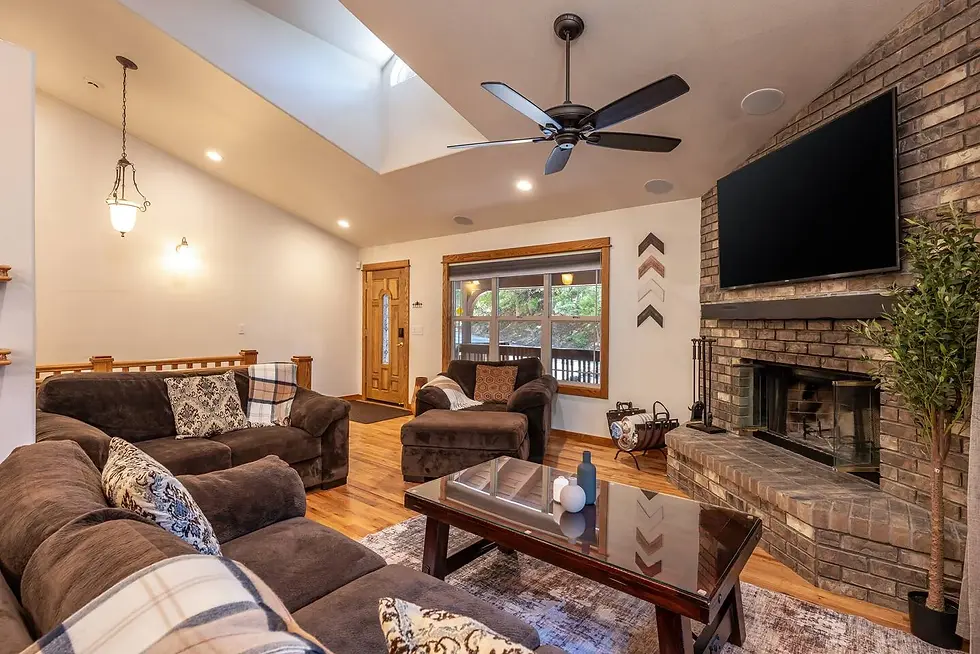
Properties like the Oak and Arrow Lodge in Lake Arrowhead demonstrate how forest setting and proximity to the lake can be powerful marketing assets, but only when the management layer clearly communicates what access guests actually have.
How Beach Market Regulations Compare
San Diego's coastal STR regulations are among the more complex in California, particularly after the Good Neighbor Policy updates that tightened permit requirements across the city. If you're familiar with navigating San Diego's Good Neighbor Policy compliance requirements, you'll find Lake Arrowhead's county-level permit process more straightforward in some respects, but the HOA layer adds a private governance variable that has no direct equivalent in most coastal markets. The pillar article on hidden costs and red flags in Carlsbad property management covers how coastal compliance costs stack up, and many of the same fee structures apply to mountain markets with different underlying triggers.

What Does Lake Arrowhead STR Revenue Look Like in 2026?
Lake Arrowhead short-term rental revenue in 2026 averages $26,900 per listing annually, according to AirDNA, with an average daily rate of $405 and a RevPAR of $128.10, up 6% year-over-year. These are market-wide averages. The performance spread within the market is wide, and where your property lands depends heavily on how it is managed.
Performance Tier | Monthly Revenue | Occupancy Rate | Nightly Rate | RevPAR |
Top 10% | $8,070+ | 61%+ | $645+ | $218 |
Top 25% | Above median | Above median | Above median | $149 |
Median | ~$2,940 | ~27% | ~$353 | $95 |
Bottom 25% | Below median | ~14% | ~$263 | $60 |
Source: AirROI, April 2026. All figures are market-wide benchmarks, not guarantees for any individual property.
Seasonal Revenue Patterns You Need to Plan Around
Peak STR revenue in Lake Arrowhead falls in December, July, and January, when peak monthly revenues can reach up to $6,829 with occupancy of 42.2% and ADRs peaking near $471 (AirROI, 2026). The weakest months are March, September, and October, which is a different seasonal curve than San Diego coastal markets, where spring and summer drive the bulk of revenue.
Holiday and weekend accommodation occupancy in Lake Arrowhead reaches 90% at peak periods, while weekday occupancy drops to approximately 45%, according to Lake Arrowhead Chamber of Commerce data. This midweek gap is where dynamic pricing strategy earns its keep. A static nightly rate set for weekend demand will underperform on weekdays, and vice versa. At The Brite Place, our revenue management approach targets exactly this kind of midweek yield gap, using real-time market data rather than guesswork to position rates relative to current demand. Our work with Big Bear cabin properties demonstrates how aggressive dynamic pricing can unlock revenue that static pricing leaves on the table.
Supply Growth and What It Means for Your Occupancy
Active STR listings in Lake Arrowhead grew 8% over the past year per AirDNA, and AirROI tracks an even sharper supply increase of 36.6% over the same period. More competition means more pressure on listings that are not optimized. Properties with outdated photos, static pricing, and minimal amenity messaging will drift toward the bottom quartile as the supply pool deepens.
The positive signal: STR revenue in Lake Arrowhead grew 12.2% year-over-year despite the supply increase, indicating that traveler demand is absorbing new inventory rather than diluting it (AirROI, 2026). But that demand absorption primarily benefits well-positioned listings, not the average or below-average performer.
What Are the Real Costs of Mountain STR Property Management?
Mountain STR property management costs in Lake Arrowhead typically include a management fee percentage on gross rental revenue, plus variable costs for cleaning, maintenance, permit compliance, and insurance that run higher than coastal equivalents for specific categories. No competitor in this market publishes a clear breakdown of these costs, which leaves most property owners guessing when they evaluate management options.
Cost Category | Lake Arrowhead (Mountain) | San Diego Coast | Notes |
Management Fee | 20-35% of gross revenue | 18-30% of gross revenue | Full-service ranges; co-host models lower |
Cleaning/Turnover | $150-$300 per turnover | $120-$250 per turnover | Mountain add: snow removal, ash/fireplace cleanup |
Winterization | $300-$800 annually | Not applicable | Pipe insulation, blowout, furnace inspection |
Snow Removal | $75-$200 per event | Not applicable | Required before guest arrival; storm timing unpredictable |
Fire Zone Insurance | Significantly higher; many carriers non-renewing | Standard coastal rider | High/very high fire hazard severity zone premiums apply |
STR Permit | San Bernardino County permit required | City of San Diego or municipality-specific | Both require TOT compliance |
HOA Fees | Variable; may include lake use restrictions | Variable; coastal association fees | Lake Arrowhead private lake adds complexity |
These ranges are typical for the market; individual property costs vary based on size, location, and specific management contract terms. For a deeper look at how management fees stack up across California markets, the complete breakdown of property manager costs covers fee structures, hidden charges, and what to negotiate before you sign.
Insurance: The Mountain-Specific Risk Layer
This is where Lake Arrowhead property owners consistently get surprised. Fire hazard severity zone classifications from the California Department of Forestry and Fire Protection affect what coverage is available and at what price. Since 2023, several major carriers have restricted new policies or non-renewed existing policies in high-risk mountain zip codes across San Bernardino County. If your coverage lapsed or was non-renewed, you may be on the FAIR Plan, California's insurer of last resort, which typically carries higher premiums and more limited coverage than standard commercial policies.
Snow load coverage is a separate consideration. Structural damage from accumulated snow on roofs or decks requires specific endorsements that standard homeowners' policies sometimes exclude. Verify your policy covers both the structure and guest liability under snow conditions before you list.
How Do Cleaning and Maintenance Protocols Differ for Mountain Rentals?
Cleaning and maintenance protocols for Lake Arrowhead STR properties differ from coastal rental protocols because mountain properties require additional turnover steps tied to weather events, fire safety equipment, and wood-burning amenities that are either absent or irrelevant in beach markets. Specifically, a mountain cabin turnover after a winter booking must include fireplace ash removal, hot tub temperature verification, snow clearance from entry paths, and a heating system check, none of which appear on a standard San Diego beach rental checklist.
What a Mountain Turnover Actually Involves
A typical turnover at a Lake Arrowhead cabin with a fireplace and outdoor fire pit requires: ash and debris removal from both fire features, restocking firewood, checking propane or gas line valves, verifying the hot tub temperature and chemical balance, clearing any ice from the deck and entry, and inspecting the furnace filter. In winter, the team also checks that pipes haven't experienced any freeze stress during the prior stay.
Beach property turnovers, by contrast, typically require beach gear rinse-downs, outdoor shower cleaning, and saltwater corrosion checks on exterior hardware. Neither is harder in absolute terms, but the error modes differ. A missed ash pile in a fireplace is a guest complaint and a fire risk. A missed saltwater rinse on deck hardware is a maintenance cost that compounds over months. You need a management team that understands which details matter in which environment.
Emergency Response Time
One practical difference that rarely gets discussed: emergency response is slower in the mountains. A guest with a plumbing issue at a Pacific Beach rental can reach a San Diego contractor within 30 to 60 minutes on most days. A guest at a Lake Arrowhead cabin during a winter storm may be waiting two to three hours for the same service. Mountain property management requires a pre-vetted local contractor network, not just a general handyman list. The most established operators in the area, including Triple A Rentals and Arrowhead Property Rental, emphasize 24-hour on-call emergency support for exactly this reason.

How Should You Evaluate Property Management Companies in Lake Arrowhead?
Evaluating a property management company for a Lake Arrowhead rental means asking questions that most owner evaluation checklists, written for generic or coastal markets, simply do not include. Mountain market expertise is not transferable from urban or coastal experience without direct operational history in the area.
Key Questions to Ask Before Signing
Do you have active contractor relationships in the Lake Arrowhead area for emergency maintenance? A management company that dispatches contractors from the valley rather than from local providers will consistently fail on response time during winter storms.
How do you handle snow removal and winter preparedness? If they don't have a specific protocol, they haven't managed mountain properties through a real winter.
What is your fee structure, and does it include cleaning, permit compliance, and insurance coordination, or are those billed separately? Mountain properties have more variable cost events than coastal properties; a management fee that looks competitive may hide additional charges for snow events, fireplace maintenance, and winterization.
How do you manage pricing across the mountain's seasonal curve, specifically the midweek occupancy gap? Static pricing on a mountain property is a revenue mistake. Ask to see how they adjust rates for weekdays in shoulder season versus peak holiday weekends.
Do you handle HOA compliance and lake access disclosure for guests? This is a Lake Arrowhead-specific question that separates managers who actually understand the market from those who manage it the same way they manage a San Diego beach house.
Full-Service vs. Co-Host Models for Mountain Properties
Mountain properties generally benefit more from full-service management than co-host arrangements, for one practical reason: the number of things that can go wrong during a weather event exceeds what a part-time co-host can reliably handle. When a pipe freezes at 11 PM in January and the guests need coordination, you want a management company with full operational infrastructure, not someone checking a phone app. The tradeoffs between property manager and co-host models are worth reviewing before you decide, but for Lake Arrowhead specifically, the full-service argument is stronger than in most markets.
Our team at The Brite Place manages properties across both the mountain and coastal markets in Southern California, and the operational differences we see are real and consistent. The most common mistake we observe from Lake Arrowhead owners switching from self-management to professional help is underestimating how much of their time was consumed by weather-triggered maintenance coordination specifically. It is the one variable that beach property owners almost never deal with at comparable frequency.
Frequently Asked Questions About Lake Arrowhead Property Management
How much does property management cost for a Lake Arrowhead vacation rental?
Full-service property management for a Lake Arrowhead short-term rental typically costs between 20% and 35% of gross rental revenue, depending on the scope of services included. Mountain properties generally carry higher operational costs than coastal equivalents because of weather-related maintenance requirements, including snow removal, winterization, and fireplace upkeep. Before signing with any manager, confirm whether cleaning, permit compliance, and emergency maintenance coordination are included in the base fee or billed as add-ons.
Do I need a permit to rent my Lake Arrowhead cabin on Airbnb?
Yes. San Bernardino County requires a Short-Term Private Home Rental Permit for any rental of fewer than 30 consecutive days. According to AirROI 2026 data, 94% of active Lake Arrowhead STR listings show registration evidence, indicating active permit enforcement. Operating without a permit risks platform removal, county citation, and transient occupancy tax liability. Budget for permit fees, inspection costs, and TOT obligations as part of your startup cost calculation.
What is the average occupancy rate for Lake Arrowhead Airbnb rentals in 2026?
The market-wide average occupancy rate for Lake Arrowhead STR listings is 34% annually, up 4% year-over-year (AirDNA, 2026). However, performance varies significantly by property quality and management approach. The top 10% of listings achieve occupancy of 61% or higher, while the bottom 25% average around 14%. Peak occupancy on holidays and weekends reaches approximately 90%, but weekday occupancy dips to around 45%, according to Lake Arrowhead Chamber of Commerce data.
How does Lake Arrowhead STR management differ from San Diego beach rental management?
Lake Arrowhead property management requires protocols specific to mountain environments: snow removal before guest arrivals, pipe winterization, fire zone insurance compliance, fireplace and hot tub maintenance, and HOA or lake access coordination. San Diego coastal management focuses more on salt air corrosion maintenance, city-level STR permit compliance, and beach gear logistics. The seasonal demand curves also differ; Lake Arrowhead peaks in December and July, while San Diego coastal properties see stronger year-round demand with a summer spike.
What are the HOA restrictions on short-term rentals in Lake Arrowhead?
Lake Arrowhead is a private lake community, and HOA rules vary by specific subdivision or association. Some communities restrict STR activity, require host registration with the HOA, or limit turnover frequency. Lake access privileges for guests depend on the property's membership status with the Lake Arrowhead Community Services District. Verify your parcel's specific HOA rules and lake use permissions before listing, since misrepresenting lake access to guests is a common source of disputes and negative reviews.
When is the best time to rent out a Lake Arrowhead cabin?
Peak STR revenue months in Lake Arrowhead are December, July, and January, driven by winter snow experiences, holiday gatherings, and summer lake activities. Monthly revenues during peak periods can reach up to $6,829 with nightly rates near $471 (AirROI, 2026). The weakest months are March, September, and October. Summer (June through August) is the busiest tourism season overall, with fall foliage in October creating a secondary demand window that, while not as strong as peak winter or summer, still attracts weekend bookings at solid rates.
Is Lake Arrowhead a good market for Airbnb investment in 2026?
Lake Arrowhead shows positive investment signals in 2026: RevPAR grew 6% year-over-year, STR revenue grew 12.2% year-over-year, and demand is absorbing new supply rather than diluting it (AirROI, 2026). The market's median monthly revenue of approximately $2,940 means profitability depends heavily on your property's position within the market. The top 10% of listings earn more than $8,070 per month, creating a strong incentive to invest in professional management, photography, and dynamic pricing from the start.
What Should Lake Arrowhead Property Owners Do Next?
Property management in Lake Arrowhead, CA demands a different operational framework than coastal Southern California markets, and the data supports investing in that expertise rather than treating it as a standard vacation rental situation. Mountain properties require winter maintenance infrastructure, local contractor relationships, fire zone insurance knowledge, and HOA compliance layers that generic management companies routinely miss. At the same time, the revenue upside is real: the top-performing Lake Arrowhead STR listings generate more than $8,070 per month (AirROI, 2026), and market-wide demand is growing faster than supply, which favors well-managed properties over self-managed ones.
If you're evaluating your options, start with the permit and HOA questions before anything else. Confirm your county permit status, verify your HOA's short-term rental rules, and check your insurance coverage against fire hazard zone requirements. Then assess whether your current management approach, or the company you're evaluating, actually has mountain-specific operational protocols in place. The gap between a median performer and a top-quartile property in this market is not about the cabin itself. It is almost entirely about how the property is managed, priced, and positioned. For context on how these decisions compare across Southern California markets, reviewing the 2026 reality check on whether property management is worth it is a useful next step for any owner still weighing the self-management question.

Managing a Lake Arrowhead vacation rental requires more than a listing and a cleaning crew. The weather variables, fire zone compliance, HOA navigation, and seasonal pricing complexity are exactly the kinds of challenges The Brite Place handles for property owners across the Southern California mountains and coast. If you want professional management that understands mountain properties specifically, including dynamic pricing, regulatory compliance, and local contractor networks, reach out to The Brite Place for a free property assessment and see what optimized management looks like for your cabin.


Comments